Rae is a passionate writer who explores word meanings, definitions, and everyday language. Through clear and simple explanations, Rae helps readers discover the meaning behind words with confidence.
What Does "Gooned" Mean? "Gooned" is the past tense of "goon," used as a verb. The meaning depends heavily on who's speaking and where. Here are the main senses you'll…
You are typing a resume line, an email signature, or a LinkedIn headline. Then you stop. Is it "masters student" or "master's student"? This small apostrophe causes a lot of…
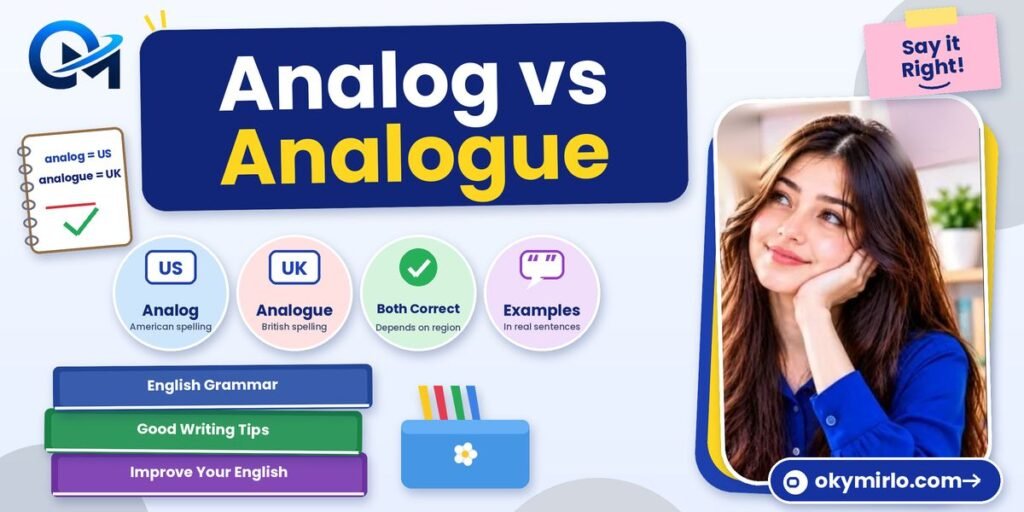
Should you write "analog" or "analogue"? Both look right, and both show up in dictionaries, which is why so many writers hesitate. The short answer is that they are the…
Contiguous and continuous look alike, sound alike, and trip up even confident writers. Swap one for the other and your sentence can end up saying something you never meant. The…
Passersby is correct. It is the plural of passerby. "Passerbyers" is not a standard English word, and "passerbys" is widely treated as an error in formal writing. If you've ever…
"Interested in" is correct. "Interested on" is a grammar mistake in standard English. You say "I'm interested in music," never "I'm interested on music." This guide explains why, shows when…
You may have seen both words in an article, a comment thread or a draft and wondered which one is correct. The short answer is that "emasculate" is the standard…
"Himself" is the correct word. "Hisself" is a nonstandard form. It appears in speech and dialect, but it does not belong in standard written English. That short answer settles most…
"People who" and "people whom" look almost identical, but only one is right in any given sentence. Pick the wrong one and your writing can look careless. Pick the right…